
Food packaging materials have changed significantly as manufacturers respond to stricter environmental requirements and shifting market expectations. Two of the most widely used solutions today are petroleum-based poly-linings and water based coating for food packaging. Both are used to provide barrier protection for paper and fiber-based packaging, but they differ in structure, environmental impact, and long-term suitability. Companies working in food packaging are now evaluating these options more closely as they balance performance requirements with sustainability targets and regulatory compliance.
Roland Coatings develops coating systems and related services for packaging applications, supporting converters and brands that need functional and compliant barrier coatings for food packaging solutions. The choice between coating types is no longer just a material decision, it directly affects recyclability, production efficiency, and brand positioning.
Petroleum-Based Poly-Linings
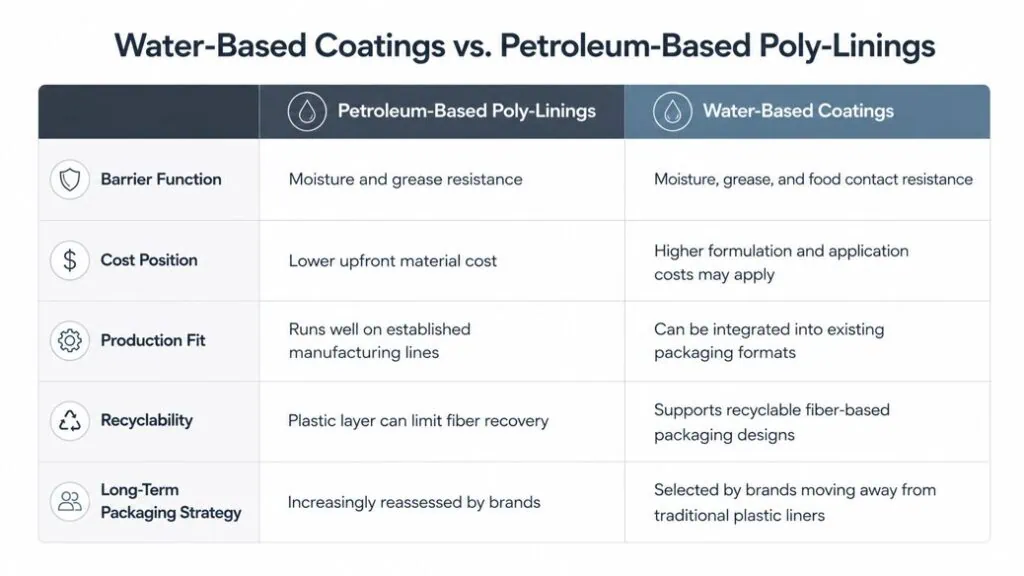
Petroleum-based poly-linings, typically polyethylene layers applied to paper or board, are widely used in food packaging because they provide strong resistance against moisture and grease. They are common in items like cups, food trays, wrappers, and frozen food packaging.
From a cost perspective, these linings are generally inexpensive and easy to source at scale. They also run well on established manufacturing lines with minimal process changes.
However, they create challenges for fiber recovery systems. The plastic layer is difficult to separate from paper fibers, which often limits recyclability and increases environmental burden. This is one reason many brands are reassessing long-term dependence on poly-lined packaging.
Water-Based Coatings
Water-based coating systems are gaining traction as an alternative for fiber-based packaging. These coatings are formulated using water as a carrier and applied to paper or board to provide functional resistance against moisture, grease, and food contact exposure.
In practical applications, a water based coating for food packaging supports packaging designs that aim to remain recyclable while still meeting functional requirements. These coatings are compatible with paper recovery streams and are commonly selected for brands moving away from traditional plastic liners.
Roland Coatings supports converters and brands through coating development and application services that help integrate water-based systems into existing packaging formats without unnecessary disruption to production flow.
Cost Considerations
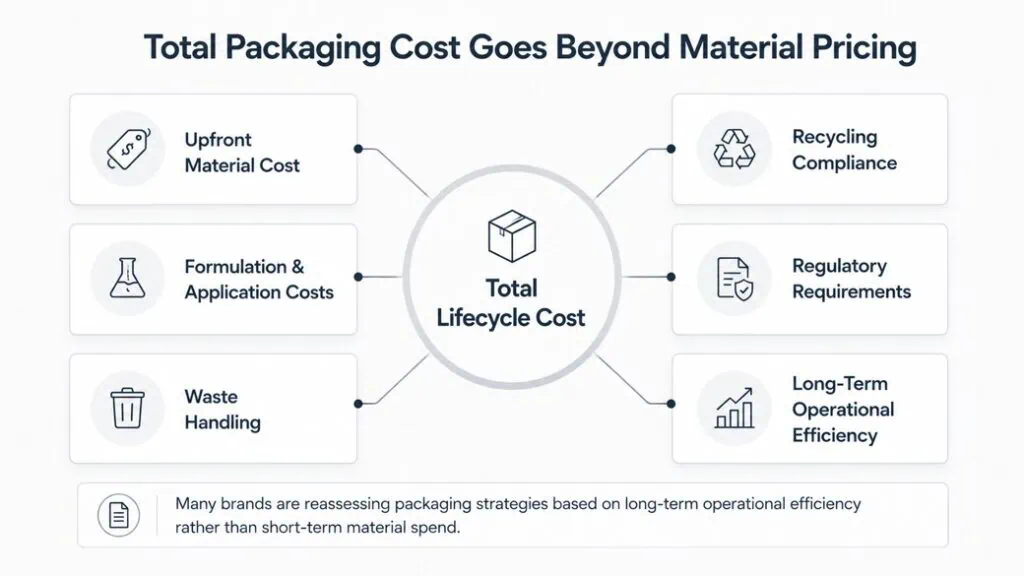
Petroleum-based poly-linings typically carry lower upfront material costs, which makes them attractive for high-volume production. Water-based coatings may involve higher formulation and application costs depending on performance requirements.
The cost discussion does not end at material pricing. Waste handling, recycling compliance, and shifting regulatory requirements can affect total lifecycle cost. Many brands are reassessing packaging strategies based on long-term operational efficiency rather than short-term material spend.
Performance in Packaging Applications
Performance requirements in food packaging are strict. Both systems are used to manage moisture, grease, and food contact safety, but they perform differently depending on application needs.
Barrier strength is often a deciding factor. Advanced barrier coatings for food packaging are developed to improve resistance while maintaining fiber recyclability. These systems are used in applications such as takeout containers, bakery packaging, and frozen food board.
Water based coating for food packaging continues to improve in heat resistance, printability, and converting line performance, making them more viable for a wider range of packaging formats.
Manufacturing Support and Toll Processing
Packaging converters often rely on external expertise to scale coating applications efficiently. This is where food grade toll processing services suppliers play a key role. These partners support formulation handling, coating application, and production scaling while maintaining compliance with food-contact standards.
Roland Coatings works with manufacturers that need support in integrating coating systems into their production lines. This includes adjusting formulations, testing application performance, and aligning output with packaging requirements across different end uses.
Don’t Let Your Packaging Get Stuck in the Plastic Past
If your packaging decisions are still stuck between cost pressure and sustainability goals, there’s a better way to move forward. Roland Coatings works with converters and brands that need functional coating solutions that actually run on real production lines, not just on paper specs. Let’s align your packaging with what the market is already moving toward cleaner systems, smarter coatings, and production-ready results. Talk to Roland Coatings to get started.