
PFAS-Free Coatings
Comments Off on PFAS-Free CoatingsPFAS-free coatings are protective barrier coatings made without per- and polyfluoroalkyl substances (PFAS), a group of chemicals that have long been used to improve grease and moisture resistance in food packaging. As packaging standards continue to change, manufacturers are looking for safer alternatives that deliver reliable performance while supporting environmental goals.
A PFAS-free coating helps food packaging resist grease, oil, and moisture without relying on fluorinated chemicals. Many companies are also replacing plastic linings with a water-based plastic replacement coating that supports paper-based packaging and other sustainable materials. Roland Coatings develops food-safe coating solutions that help manufacturers meet performance expectations while moving away from traditional plastic barriers.
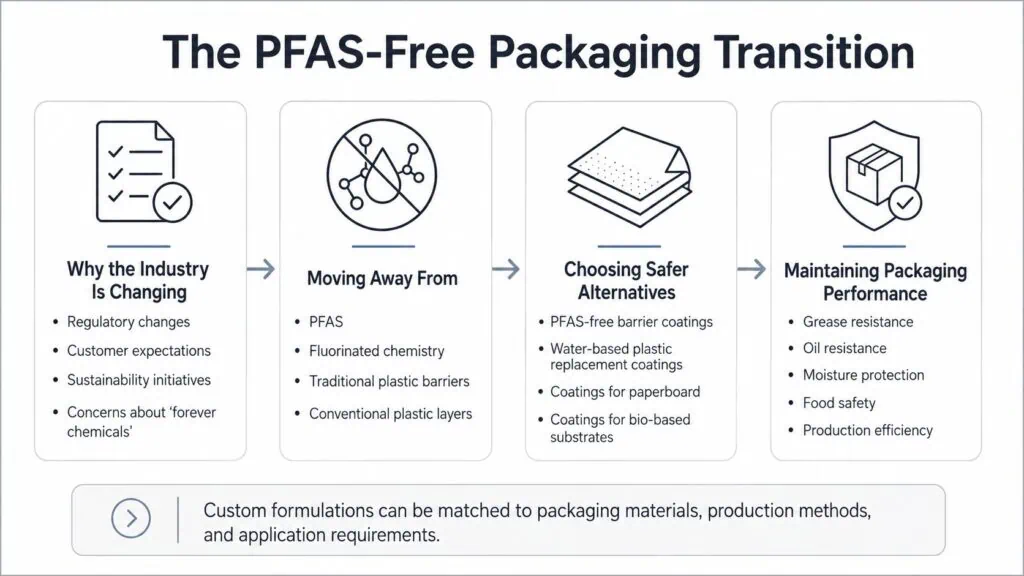
Why the Food Packaging Industry Is Moving Away from PFAS
Packaging manufacturers are under growing pressure to reduce the use of PFAS. Regulatory changes, customer expectations, and company sustainability initiatives are driving the shift to safer materials that support long-term packaging goals.
PFAS are often called “forever chemicals” because they break down very slowly in the environment. That has encouraged many food brands to look for coating technologies that can provide strong barrier protection without relying on these compounds.
Making the change also supports business goals. Companies want packaging that performs well during food processing, transportation, storage, and consumer use while supporting recycling and waste reduction efforts. Choosing PFAS-free coatings allows manufacturers to move ahead with packaging improvements without giving up grease or moisture resistance.
Roland Coatings works with packaging manufacturers to develop coating solutions that meet application requirements while supporting food safety and sustainability objectives. Custom formulation capabilities also help customers find coatings that fit their products, production methods, and packaging materials.
- Replaces fluorinated chemistry with safer alternatives
- Supports changing food packaging requirements
- Helps reduce dependence on traditional plastic barriers
- Provides grease, oil, and moisture resistance for food packaging
- Custom formulations are available for specific packaging applications
How PFAS-Free Barrier Coatings Deliver Reliable Protection
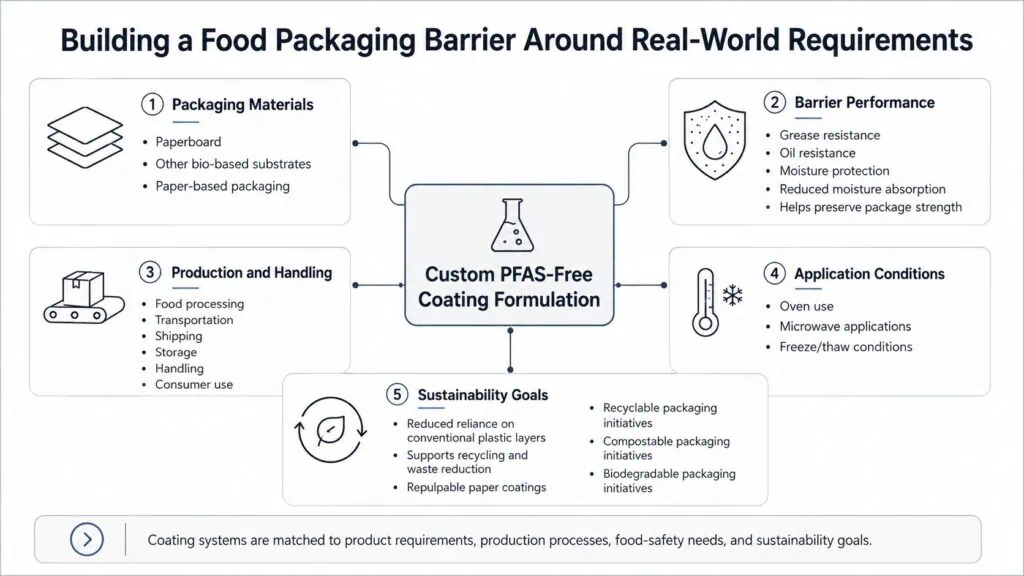
Barrier performance remains one of the most important requirements in food packaging. A quality food contact approved barrier coating helps prevent grease and oil from soaking into paper packaging while reducing moisture absorption that can weaken package strength.
These coatings also help preserve product quality throughout shipping, storage, and handling. For manufacturers, that means fewer concerns about package failure while maintaining an attractive appearance for printed graphics.
Roland Coatings develops coating technologies that perform well on paperboard and other bio-based substrates. This gives manufacturers more flexibility when replacing plastic-lined materials with sustainable packaging options. Food-contact applications often require dependable barrier performance without sacrificing production efficiency, and custom coating formulations help meet those demands.
Supporting Circular Packaging with Sustainable Coating Technologies
Many companies are shifting to paper-based packaging as part of their sustainability programs. Coating technology plays an important role in making those materials suitable for food applications.
A water-based plastic replacement coating can provide barrier performance while reducing reliance on conventional plastic layers. For manufacturers looking to improve recyclability, repulpable paper coatings support paper recovery by allowing compatible packaging materials to move through the recycling process more effectively.
Roland Coatings develops coating solutions that support recyclable, compostable, and biodegradable packaging initiatives. By working closely with customers, the company helps identify coating systems that match product requirements, production processes, and sustainability goals without compromising food safety.
Ready to Ditch PFAS? Let’s Build Better Barriers
Choosing a coating partner shouldn’t feel complicated, it should feel like progress. If you’re ready to move beyond PFAS and toward safer, high-performance packaging, Roland Coatings is here to help.
We develop custom coating formulations designed for real-world food packaging demands. Whether you need grease resistance, moisture protection, or a water-based plastic replacement coating, our team works with you to create solutions that fit your materials, processes, and sustainability goals.
Let’s turn your packaging challenges into smarter, safer solutions, together. Contact us today!
FAQ
- What packaging materials are compatible with Roland Coatings’ barrier coatings?
Roland Coatings develops barrier coatings for paperboard and other bio-based materials, giving packaging manufacturers greater flexibility when developing sustainable food packaging solutions.
- Are Roland Coatings’ food packaging coatings suitable for microwave and freezer applications?
Yes. Many Roland Coatings formulations are developed for oven use, microwave applications, and freeze/thaw conditions while maintaining their protective barrier properties.
- What substances are excluded from Roland Coatings’ coating formulations?
All Roland Coatings formulations are produced without BPA, PFAS (including PFOA and PFOS), phthalates, parabens, mineral oils, and other non-FDA-approved materials for food-contact applications.
Water-Based Coatings vs. Petroleum-Based Poly-Linings: Cost, Performance, and Sustainability
Comments Off on Water-Based Coatings vs. Petroleum-Based Poly-Linings: Cost, Performance, and SustainabilityFood packaging materials have changed significantly as manufacturers respond to stricter environmental requirements and shifting market expectations. Two of the most widely used solutions today are petroleum-based poly-linings and water based coating for food packaging. Both are used to provide barrier protection for paper and fiber-based packaging, but they differ in structure, environmental impact, and long-term suitability. Companies working in food packaging are now evaluating these options more closely as they balance performance requirements with sustainability targets and regulatory compliance.
Roland Coatings develops coating systems and related services for packaging applications, supporting converters and brands that need functional and compliant barrier coatings for food packaging solutions. The choice between coating types is no longer just a material decision, it directly affects recyclability, production efficiency, and brand positioning.
Petroleum-Based Poly-Linings
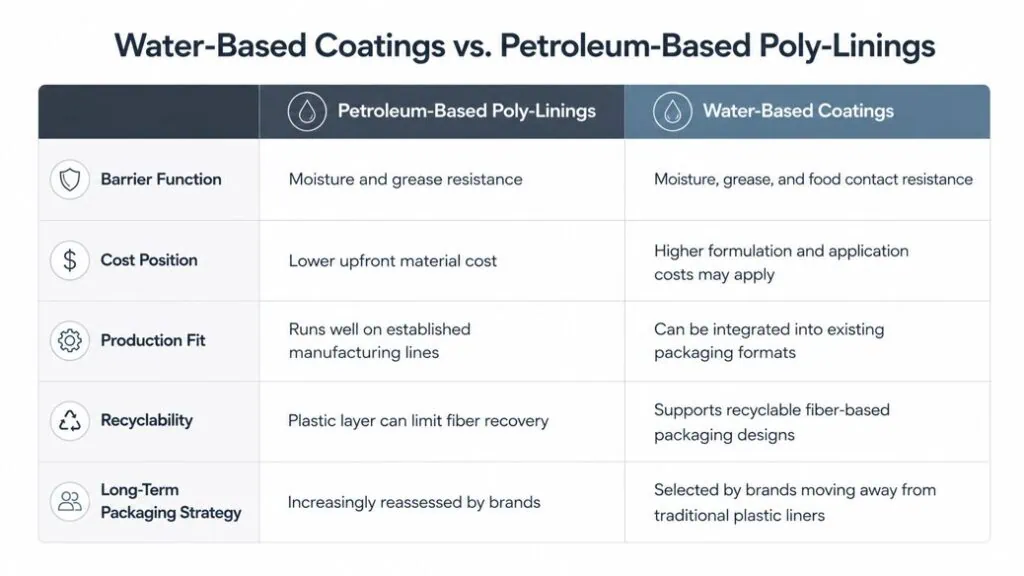
Petroleum-based poly-linings, typically polyethylene layers applied to paper or board, are widely used in food packaging because they provide strong resistance against moisture and grease. They are common in items like cups, food trays, wrappers, and frozen food packaging.
From a cost perspective, these linings are generally inexpensive and easy to source at scale. They also run well on established manufacturing lines with minimal process changes.
However, they create challenges for fiber recovery systems. The plastic layer is difficult to separate from paper fibers, which often limits recyclability and increases environmental burden. This is one reason many brands are reassessing long-term dependence on poly-lined packaging.
Water-Based Coatings
Water-based coating systems are gaining traction as an alternative for fiber-based packaging. These coatings are formulated using water as a carrier and applied to paper or board to provide functional resistance against moisture, grease, and food contact exposure.
In practical applications, a water based coating for food packaging supports packaging designs that aim to remain recyclable while still meeting functional requirements. These coatings are compatible with paper recovery streams and are commonly selected for brands moving away from traditional plastic liners.
Roland Coatings supports converters and brands through coating development and application services that help integrate water-based systems into existing packaging formats without unnecessary disruption to production flow.
Cost Considerations
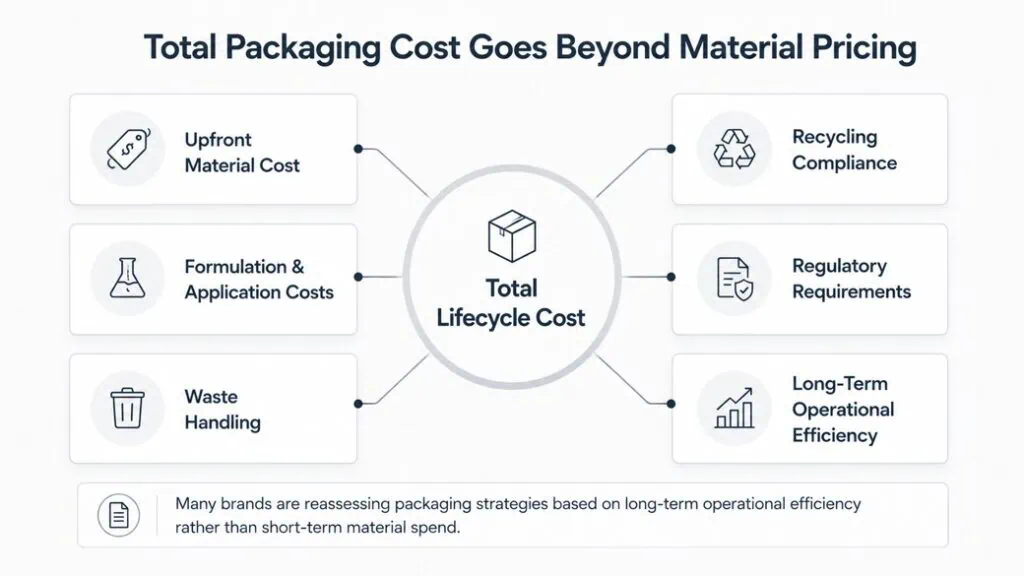
Petroleum-based poly-linings typically carry lower upfront material costs, which makes them attractive for high-volume production. Water-based coatings may involve higher formulation and application costs depending on performance requirements.
The cost discussion does not end at material pricing. Waste handling, recycling compliance, and shifting regulatory requirements can affect total lifecycle cost. Many brands are reassessing packaging strategies based on long-term operational efficiency rather than short-term material spend.
Performance in Packaging Applications
Performance requirements in food packaging are strict. Both systems are used to manage moisture, grease, and food contact safety, but they perform differently depending on application needs.
Barrier strength is often a deciding factor. Advanced barrier coatings for food packaging are developed to improve resistance while maintaining fiber recyclability. These systems are used in applications such as takeout containers, bakery packaging, and frozen food board.
Water based coating for food packaging continues to improve in heat resistance, printability, and converting line performance, making them more viable for a wider range of packaging formats.
Manufacturing Support and Toll Processing
Packaging converters often rely on external expertise to scale coating applications efficiently. This is where food grade toll processing services suppliers play a key role. These partners support formulation handling, coating application, and production scaling while maintaining compliance with food-contact standards.
Roland Coatings works with manufacturers that need support in integrating coating systems into their production lines. This includes adjusting formulations, testing application performance, and aligning output with packaging requirements across different end uses.
Don’t Let Your Packaging Get Stuck in the Plastic Past
If your packaging decisions are still stuck between cost pressure and sustainability goals, there’s a better way to move forward. Roland Coatings works with converters and brands that need functional coating solutions that actually run on real production lines, not just on paper specs. Let’s align your packaging with what the market is already moving toward cleaner systems, smarter coatings, and production-ready results. Talk to Roland Coatings to get started.